Ginmon Annual Report 2022
The year 2022 was a challenging one for all investors. Inflation returned with a vengeance that no one had thought possible after 10 years of zero interest rate policy. The war in Ukraine presented the world, and Europe in particular, with new challenges. And in China, all Covid restrictions unexpectedly fell recently, after the country had long praised its zero-Covid policy as a panacea. In many ways, it was a year of the much-cited turning points.
What is it about?
Turning Point #1: The Return of Inflation
Turning Point #2: China Scraps Zero-Covid Policy
Turning Point #3: War in the Heart of Europe
Performance of Ginmon Portfolios
Turning Point #1: The Return of Inflation
It was one of the defining themes of 2022: inflation. Following more than ten years of low inflation rates and equally low interest rates, last year's price increases were a completely new experience for many consumers, investors, and central bankers. Although inflation rates had already risen in 2021, at the time this was still assumed to be only temporary. The fact that high inflation persisted stubbornly throughout the entirety of 2022 therefore took stock market traders and central bankers by surprise – with correspondingly negative consequences for the capital market.
This is because central banks found themselves forced to raise interest rates as quickly and sharply as they had not done in a long time. The US Federal Reserve increased the key interest rate by a full 4.25% in ten months. This is the fastest rate hike cycle in 35 years. The ECB even increased interest rates more sharply than ever before in its history.
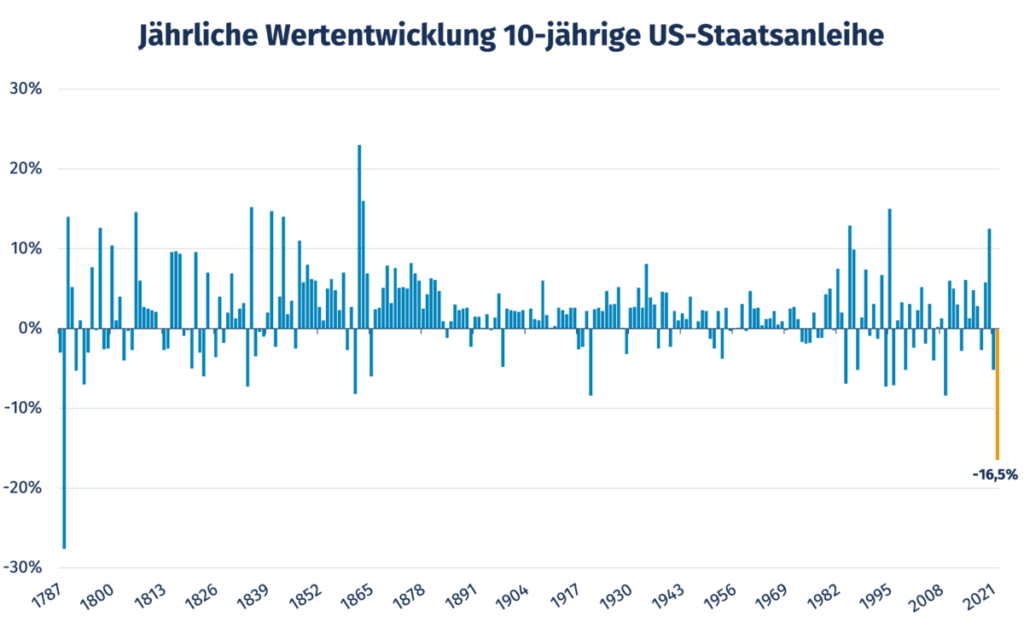
Source: Deutsche Bank, S&P Global Indices, Performance in US Dollars, as of 31/12/2022
The result was partly massive losses in the value of government bonds, real estate values, and growth stocks. Bond prices typically behave inversely to the interest rate environment. If interest rates rise, the value of the bond falls. It is a stunning statistic: 2022 was the worst year since 1788 for what are normally highly secure US government bonds.
Growth stocks from the technology or biotech sectors, such as those summarized in the American Nasdaq Index, finance their growth mainly through debt, because unlike their counterparts – value stocks – substantial cash flows do not yet prevail to the same extent. They suffer from the higher debt burden just like real estate, the financing of which has become increasingly difficult over the course of the year due to rising mortgage interest rates.
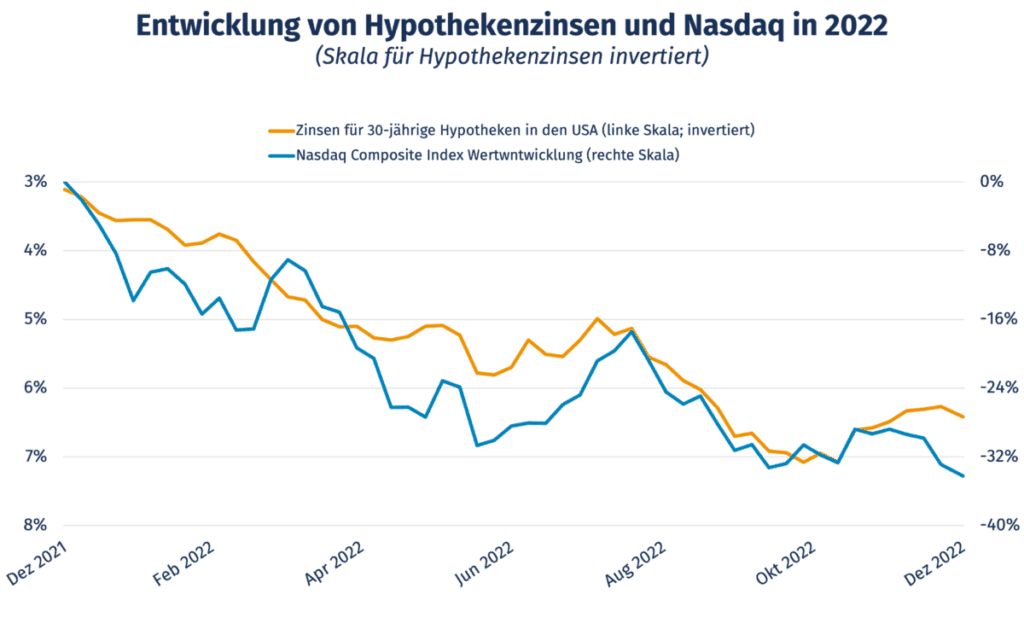
Source: St. Louis Fed, as of 31/12/2022
Fortunately, however, initial indicators point to easing inflation. For instance, pressure on global supply chains has significantly decreased, gas prices are moving back to pre-Ukraine war levels, and in the USA, rents are even falling in some cities.
Turning Point #2: China Scraps Zero-Covid Policy
China's zero-Covid policy was a recurring theme throughout 2022. At the beginning of the year, the Chinese state leadership shocked global supply chains with a weeks-long total lockdown of Shanghai. At the peak of the lockdown, ships in the local port had to wait an average of 69 hours for clearance. The result was a massive collapse in economic activity, which only normalised again two months later.
At the end of the year, the Chinese Communist Party then made an abrupt U-turn despite rising infection rates. In the face of the largest protests since 1989, almost all Corona restrictions were abolished, resulting in at least 250 million Chinese people becoming infected with Corona in December alone, according to supposedly leaked government reports. No observer would have thought such a radical departure from the zero-Covid policy possible at the beginning of the year. Purchasing managers' indices, however, indicate that this measure could weigh as heavily on the Chinese economy in the short term as the continuous lockdown did at the beginning of 2022.
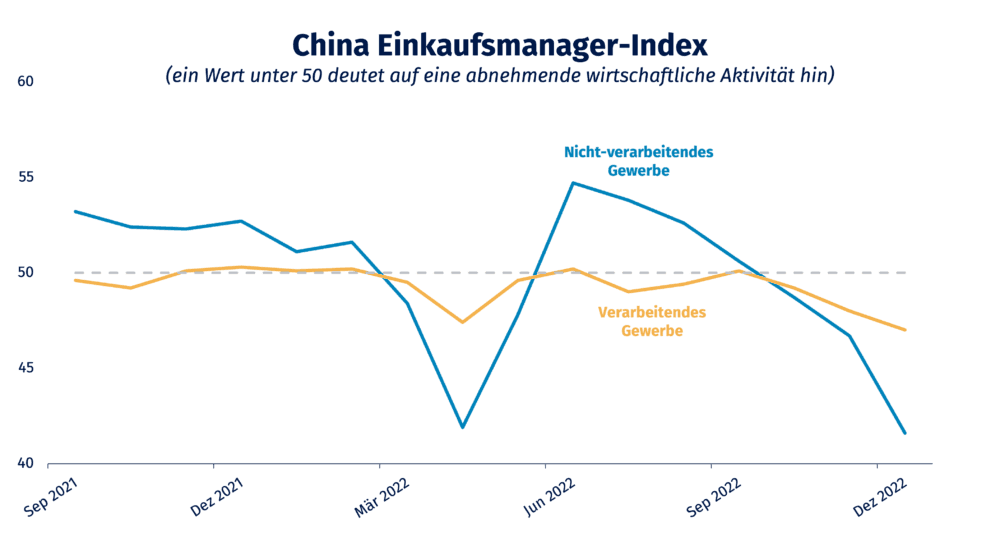
Source: National Bureau of Statistics of China, as of 05/01/2023
Turning Point #3: War in the Heart of Europe
In a year where many apparent certainties dissolved into thin air, the war in Ukraine certainly represented the biggest turning point; with radical and terrible consequences, especially for the people in Ukraine. For capital markets, this was an additional factor of uncertainty. The sharply rising prices of oil and gas resulting from the war were, along with supply chain issues, a key factor behind the high inflation rates. In the Eurozone, energy prices alone contributed 3.7% to inflation in October 2022.
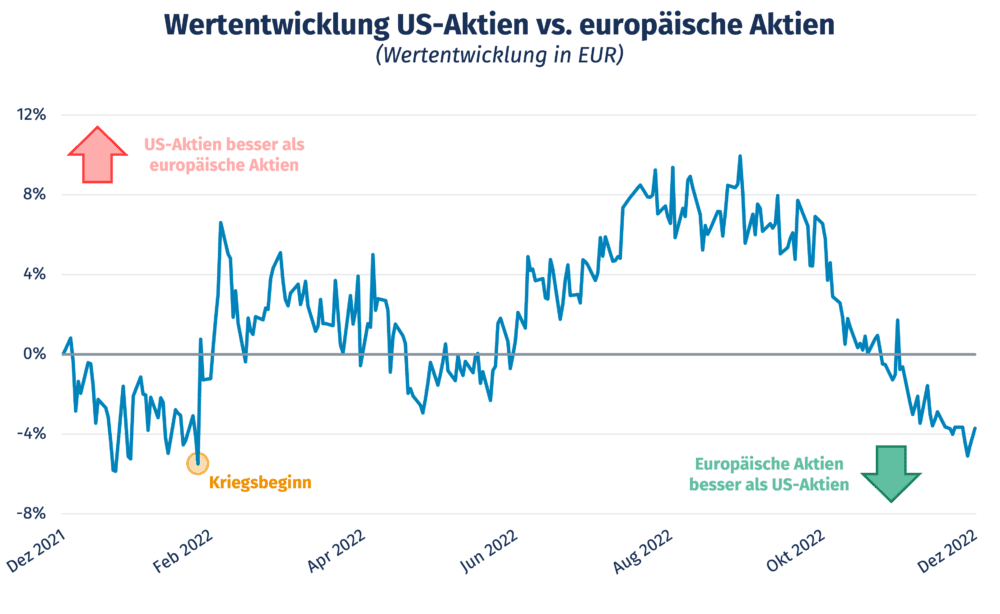
Source: MSCI, Performance in Euro, as of 31/12/2022
All the more surprising, then, that European equities fared better this year in comparison to US securities. This may seem counter-intuitive with a war on European soil. Indeed, US equities did gain strongly in relative terms right at the start of the war and in the late summer due to concerns over energy security (keyword: Nord Stream pipeline) compared to European equities. But history has shown time and again that political stock markets – as the saying goes – have
Die Inhalte dieses Artikels stellen keine Anlageberatung oder Aufforderung zum Kauf oder Verkauf von Finanzinstrumenten dar. Dieser Artikel ersetzt keine Rechts- oder Steuerberatung und dient ausschließlich Diskussionszwecken. Die in diesem Artikel vertretenen Meinungen stellen die aktuelle Einschätzung von Ginmon dar, die sich ohne vorherige Ankündigung ändern kann. Ginmon übernimmt keine Garantie für die Richtigkeit und Vollständigkeit der dargestellten Informationen. Frühere Wertentwicklungen sind kein verlässlicher Indikator für künftige Wertentwicklungen. Geldanlagen am Kapitalmarkt sind mit Risiken verbunden. Bitte lesen Sie unseren Risikohinweis.